Did you know that approximately 90 percent of all building construction problems – excluding structural errors – are associated with water intrusion? This staggering statistic highlights a massive vulnerability for property owners. Commercial buildings face a relentless daily battle against the elements, and a neglected facade does much more than simply ruin your property’s curb appeal. Bare walls and peeling surfaces leave your structural envelope entirely exposed to expensive moisture damage, internal corrosion, and ballooning energy costs.
Conversely, a fresh coat of high-quality commercial paint acts as a highly effective, protective shield. Beyond stopping water in its tracks, advanced exterior coatings can actively reflect solar heat. According to the EPA’s Energy Star program, reflective roof and exterior coatings can lower surface temperatures by up to 100°F, potentially reducing a building’s cooling energy demands by up to 50 percent. This turns a simple aesthetic upgrade into a highly profitable investment.
Do not wait until extensive water damage forces a costly structural renovation. Discover why maintaining your building’s exterior paint is a strictly necessary component of facility management, and learn how a professional application protects your long-term bottom line.
The Hidden Threat of Moisture Intrusion
Moisture is the silent enemy of commercial architecture. When water finds its way into concrete, brick, or wood, it begins a slow process of degradation that can compromise the safety and integrity of the entire structure.
How Exterior Paint Acts as a Waterproof Barrier
Porous building materials naturally absorb water from rain, humidity, and condensation. High-grade commercial exterior paint is formulated to seal these pores, creating a durable waterproof membrane across the facade. Elastomeric paints, for instance, are designed to stretch and contract as the building shifts with temperature changes. This flexibility bridges microscopic hairline cracks that would otherwise serve as entry points for wind-driven rain. By stopping water at the surface, you prevent hydrostatic pressure from pushing moisture deeper into the interior walls.
Preventing Structural Decay and Mold
When water breaches the building envelope, the consequences are severe. In masonry buildings, trapped moisture can freeze and expand, causing brick and concrete to spall or crack. For properties with structural steel components, water ingress accelerates rust and corrosion. Furthermore, persistent dampness creates the perfect breeding ground for mold and mildew within wall cavities. These biological hazards pose significant health risks to tenants and employees. A robust exterior paint job prevents this chain reaction by cutting off the moisture supply at the source.
Boosting Energy Efficiency with Reflective Coatings
Energy consumption represents one of the highest overhead costs for commercial property owners. Fortunately, the exterior paint you choose can have a direct and measurable impact on your monthly utility bills.
Lowering HVAC Costs
Dark-colored facades and roofs absorb massive amounts of solar radiation, transferring that heat directly into the building’s interior. This forces commercial air conditioning systems to work harder, consume more electricity, and wear out faster. Modern exterior paints utilize reflective pigments that bounce solar ultraviolet and infrared rays back into the atmosphere. By keeping the exterior surfaces cooler, less thermal energy transfers indoors. This significantly reduces the peak cooling load, allowing HVAC systems to operate efficiently and extending the lifespan of expensive climate control equipment.
Combating the Urban Heat Island Effect
Commercial properties located in dense metropolitan areas contribute to the urban heat island effect. Concrete and asphalt absorb heat throughout the day and release it slowly at night, keeping city temperatures artificially high. Utilizing light-colored, reflective exterior paint on your commercial building helps mitigate this localized warming. Participating in this collective temperature reduction not only benefits the local environment but also lowers ambient cooling requirements for your immediate neighborhood.
Enhancing Brand Perception and Curb Appeal
While structural protection is paramount, the aesthetic value of a commercial paint job cannot be overstated. The exterior of your building serves as a physical representation of your brand’s quality and professionalism.
First Impressions Matter for Businesses
Customers, clients, and potential partners make split-second judgments about a business based on its physical appearance. A faded, chalky, or peeling exterior signals neglect and poor management. It can cause consumers to subconsciously doubt the quality of the services or products offered inside. A pristine, freshly painted facade projects stability, success, and attention to detail. It inspires confidence and creates a welcoming environment that encourages foot traffic and client trust.
Increasing Property Value and Tenant Retention
For property managers and real estate investors, curb appeal directly correlates with asset valuation. A well-maintained exterior commands higher lease rates and attracts premium commercial tenants. Businesses want to operate out of locations that reflect well on their own operations. If you are looking to sell the property, a recent commercial paint application yields a high return on investment by demonstrating to buyers that the facility has been proactively maintained and requires no immediate capital expenditures.
Understanding the Commercial Repaint Cycle
Property owners often wonder exactly when they should allocate budget for a facade refresh. Understanding the typical lifecycle of commercial paint helps you plan effectively.
When Should You Repaint Your Property?
According to industry leaders like Sherwin-Williams, the average commercial building repaint cycle falls between five to seven years. However, this timeline varies heavily based on the local climate and the specific materials used. Buildings exposed to intense tropical sun, heavy rainfall, or harsh coastal salt air may require more frequent maintenance to prevent the protective coating from breaking down.
Signs Your Building Needs a Fresh Coat
Visual inspections are critical for catching paint failure early. Keep an eye out for visible chalking, which occurs when UV rays break down the paint binders, leaving a powdery residue on the surface. Blistering and peeling indicate that moisture has already bypassed the coating and is pushing the paint away from the substrate. Additionally, severe fading or noticeable wood rot are clear indicators that your building is overdue for a professional painting intervention.
Navigating Building Maintenance and Safety
Painting a large-scale commercial property is a complex logistical operation. It requires adherence to strict safety protocols and specialized application methods.
Meeting Local Maintenance Standards
Many municipalities enforce strict building codes regarding facade maintenance. Allowing an exterior to deteriorate visibly can result in fines from local regulatory bodies. Keeping your paint in excellent condition ensures compliance with commercial property standards while avoiding stressful legal or financial penalties.
Ensuring Safety with Proper Application
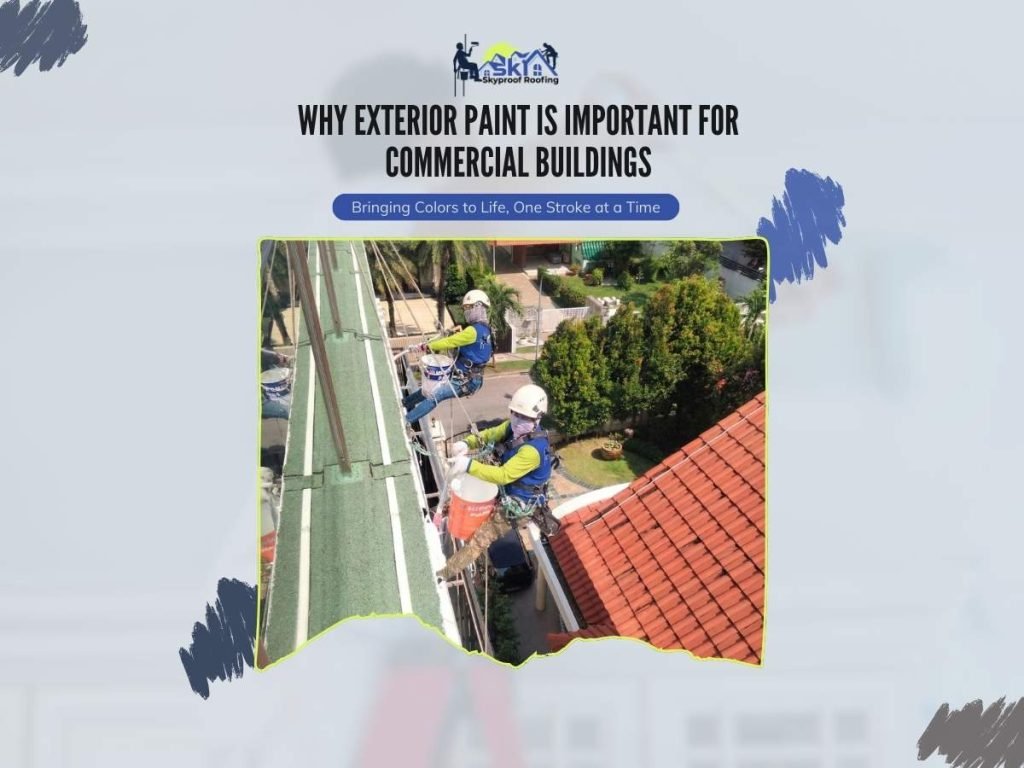
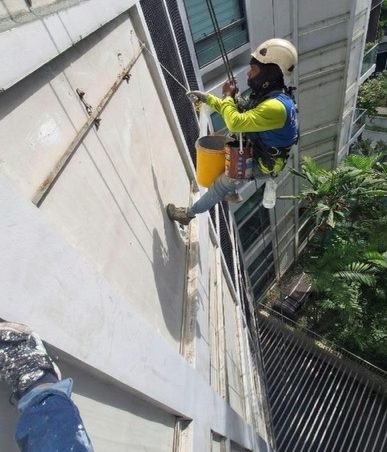
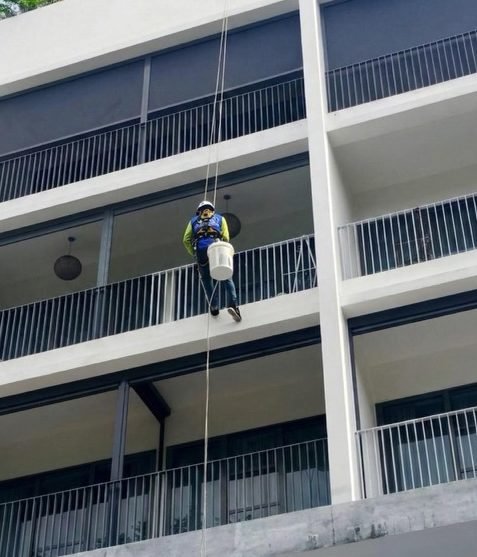
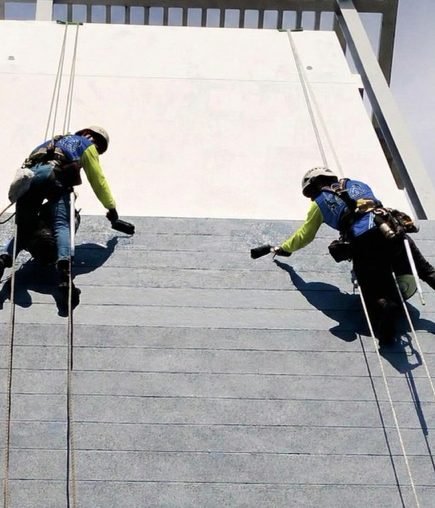
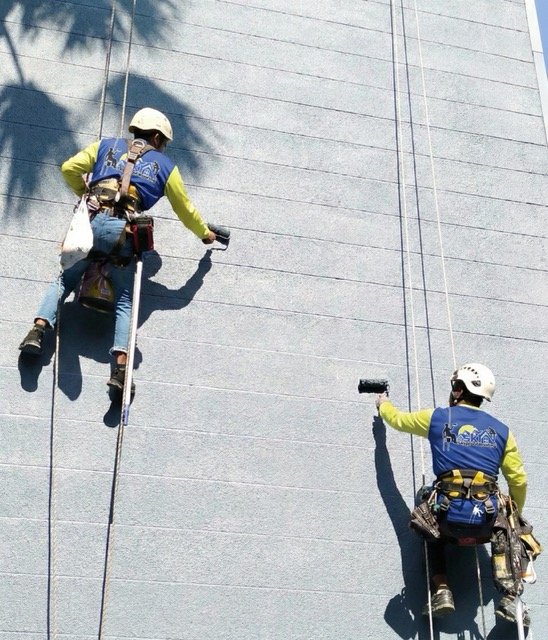
Accessing high-rise commercial facades presents significant safety challenges. Traditional scaffolding is often disruptive, expensive, and time-consuming to erect. This is where specialized application methods become vital. Professional contractors utilize industrial rope access techniques to reach difficult areas safely and efficiently. Rope access minimizes ground-level disruption, allowing the businesses inside to operate normally while the exterior receives a flawless, uniform coating.
Frequently Asked Questions
How often should a commercial building be painted?
Most commercial buildings should be repainted every five to seven years. However, properties exposed to harsh weather, high humidity, or intense UV radiation may need a fresh coat every three to five years to maintain structural protection.
Does exterior paint waterproof a commercial building?
Yes. High-quality commercial exterior paints, particularly elastomeric coatings, create a flexible, waterproof barrier. This seals microscopic cracks and prevents rainwater from penetrating porous materials like concrete and brick.
Can exterior paint improve energy efficiency?
Absolutely. Reflective exterior paints and coatings bounce solar radiation away from the building. This can reduce exterior surface temperatures by up to 100°F, lowering indoor cooling demands and decreasing HVAC energy costs.
What is the best type of paint for commercial exteriors?
The ideal paint depends on the substrate. Acrylic latex is excellent for general masonry due to its breathability and color retention. Elastomeric paint is highly recommended for waterproofing concrete and stucco surfaces.
How does the weather affect commercial exterior paint?
Intense sunlight degrades paint binders, causing chalking and fading. Heavy rain and high humidity promote blistering and mold growth. Fluctuating temperatures cause building materials to expand and contract, leading to cracking.
Why is curb appeal important for commercial properties?
Curb appeal creates a strong first impression for clients and customers. A well-maintained, freshly painted building projects professionalism and success, which helps attract premium tenants and increases overall property value.
How long does a commercial exterior painting project take?
The timeline depends on the building’s size, weather conditions, and required surface preparation. Small properties may take a few days, while high-rise buildings requiring rope access or extensive repairs can take several weeks.
What happens if you delay commercial exterior painting?
Delaying exterior painting leaves the building vulnerable to water intrusion. This can lead to severe structural damage, including concrete spalling, rusted steel supports, internal mold growth, and significantly higher repair costs.
Do commercial painting contractors need special certifications?
Yes. Commercial painters operating at heights must have specific safety certifications. For high-rise buildings, technicians should hold IRATA (Industrial Rope Access Trade Association) certifications to ensure safe and compliant operations.
How much does commercial exterior painting cost?
Costs vary widely based on building square footage, access difficulty, surface preparation needs, and paint quality. Requesting a detailed inspection from a specialized contractor is the best way to receive an accurate estimate.
Secure Your Building’s Future With Skyproof Roofing Pte Ltd
A commercial building is a massive financial asset, and protecting its exterior is the most effective way to ensure its longevity. By investing in regular exterior painting, you safeguard your property against destructive water intrusion, lower your energy consumption, and present a flawless, professional image to the public.
When it comes to executing a flawless facade upgrade, you need a partner you can trust. Skyproof Roofing Pte Ltd is the premier Exterior Painting Contractor in Singapore. We specialize in external painting, rope access works, and comprehensive waterproofing solutions. Our team of highly trained professionals is fully certified in rope access, allowing us to deliver safe, efficient, and cost-effective painting services for high-rise commercial buildings, industrial properties, and residential landed projects.
Beyond standard painting, our expertise encompasses complete rope access external facade maintenance and rigorous waterproofing works designed to prevent leaks and structural damage long before they occur. We pride ourselves on delivering professional painting services for both interior and exterior surfaces with zero compromise on quality.
Protect your investment with the industry’s best. Contact Skyproof Roofing Pte Ltd today to schedule a comprehensive exterior consultation and discover how we can transform and secure your commercial property.